Computational Chemistry Solutions
Computational Chemistry Solutions
Origin Quantum uses hybrid quantum–classical methods with ChemiQ and pyChemiQ for molecular modeling, energy calculations, potential energy surface analysis and algorithm development, supporting reaction mechanisms, materials and quantum chemistry research.
Overview
Research into electronic structure, stable geometries and reactions in complex molecules must balance accuracy with computing costs. Larger molecular systems place greater demands on algorithms and computing resources.
Origin Quantum uses hybrid quantum–classical methods with ChemiQ and pyChemiQ for molecular modeling, energy calculations, potential energy surface analysis and algorithm development, supporting reaction mechanisms, materials and quantum chemistry research.

Industry Challenges

Costly Molecular Property Calculations
Electronic interactions in complex molecules raise computing demands, requiring a balance of accuracy, system size and resource costs.
Complex Stable-Structure Searches
Molecules can have many geometries with different energies, requiring structural searches and computational comparisons.
Difficult Pathway and Barrier Analysis
Reactions break and form bonds, requiring analysis of reactants, intermediates, transition states and products.
Lengthy Materials and Catalyst Research
Repeated structure screening, property prediction and experiments place growing demands on computing tools and research workflows.
Quantum Algorithm Development Barriers
Chemical models must be translated for quantum computation, requiring molecular input, mapping, circuit construction and optimization tools.
Solution Architecture
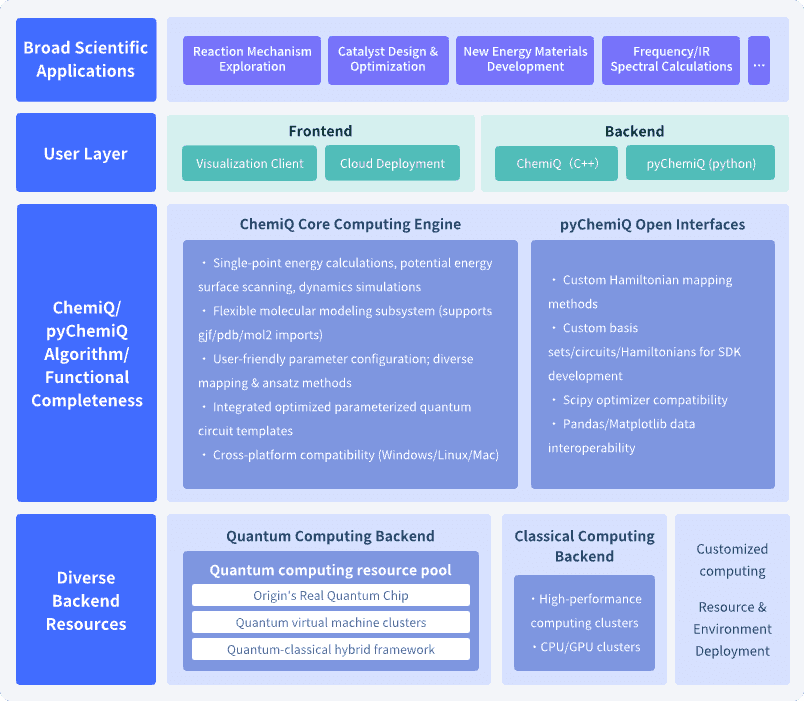
A four-layer architecture spanning applications, software tools, algorithm computation and computing resources.
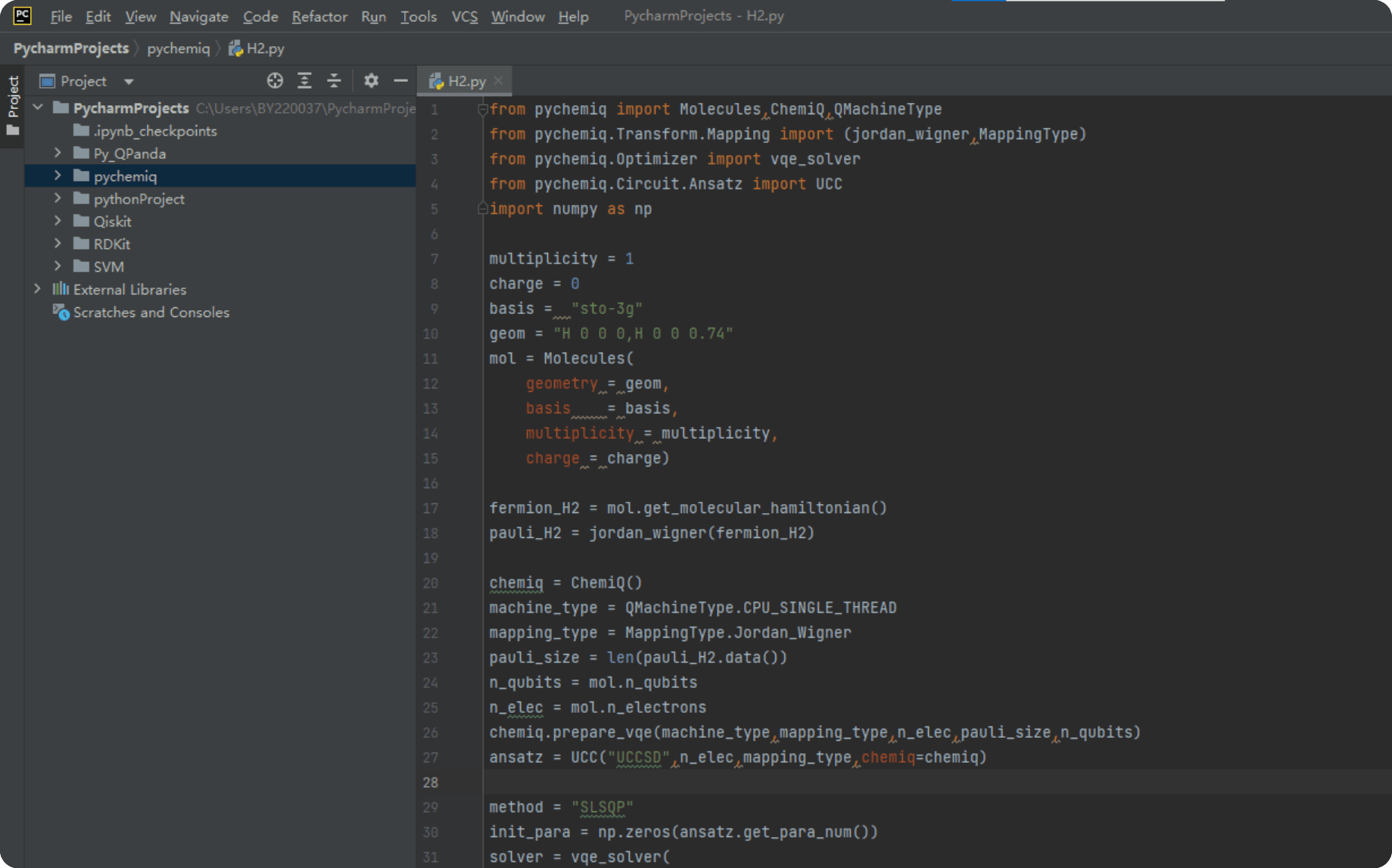
ChemiQ supports molecular modeling, job setup and result analysis, while pyChemiQ supports method development and custom computation. Local, cluster and quantum backends support computation and validation under different research conditions.
Key Advantages

Connected Client and Library
ChemiQ and pyChemiQ provide graphical and programming workflows, using a common data format for combined computation.

Multiple Computing Backends
Local, cluster and quantum resources offer execution options for algorithm research, model validation and calculations.

Customization and Further Development
Configurable mappings, ansatz circuits and optimizers support algorithm comparison and custom development.

Tools for Chemistry Research
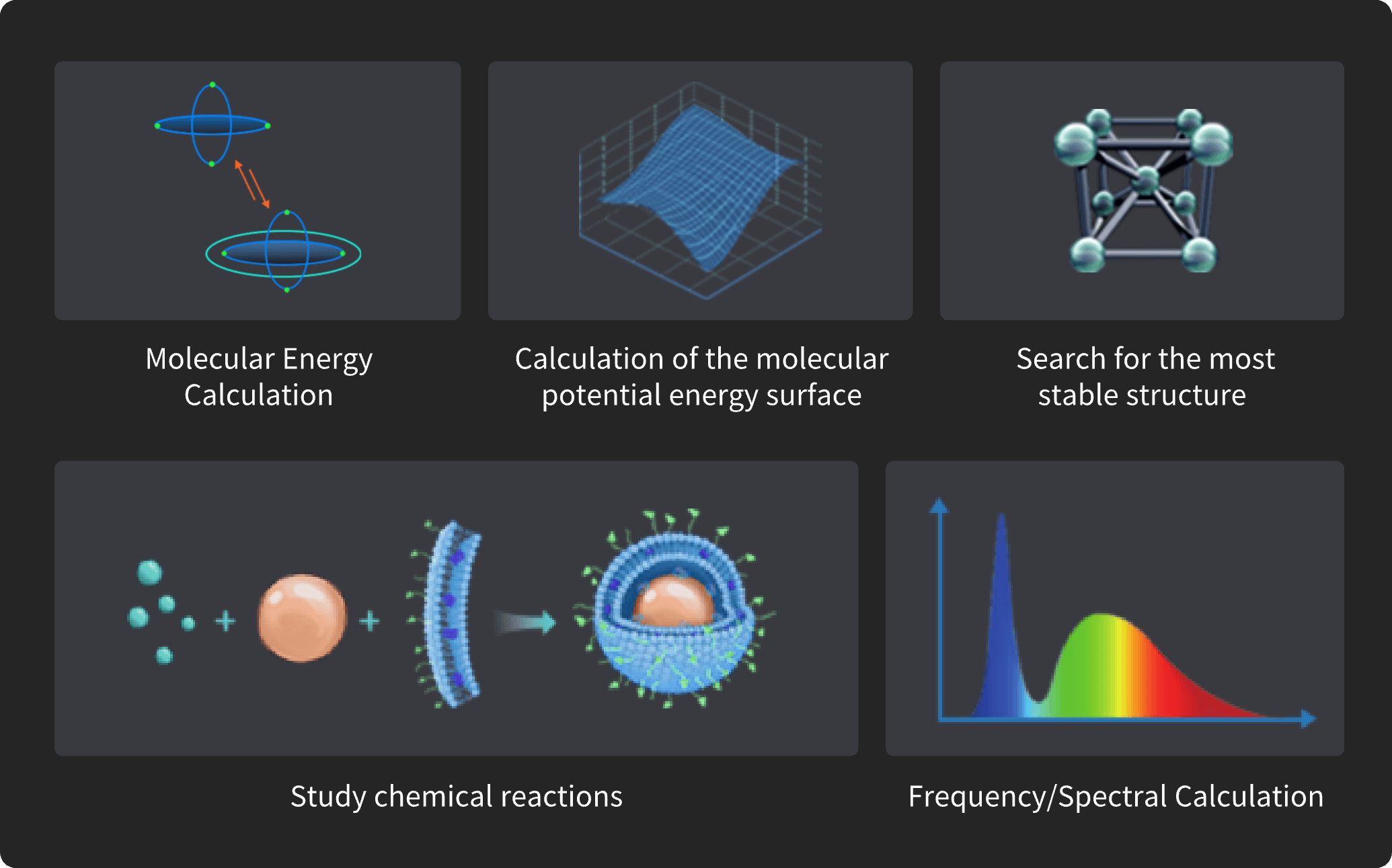
Ground-state energy, structure, potential energy surface, reaction barrier and frequency calculations support chemistry research and teaching.
Core Products
ChemiQ
pyChemiQ
Applications
Molecular Electronic Structure
Calculate ground-state energies, electronic structures and stable geometries to inform property analysis, theoretical research and materials design.
Reaction Mechanism Research
Analyze reactant, intermediate, transition-state and product structures and energies to study potential energy surfaces, pathways and barriers.
New Materials and Energy Research
Model structures, calculate energies and analyze properties of catalysts, battery materials and functional molecules to compare candidates and guide experiments.
Molecular Spectra and Properties
Calculate molecular frequencies and related properties for infrared analysis, molecular characterization and comparison with experiments.
Collaboration Partners




Consultation Process
Requirements
Define molecular systems, computing tasks and expected results.

Assessment
Select methods, software and computing backends.
Joint Validation
Configure models, run cases and analyze results.
Implementation
Apply software, develop custom tools or continue joint research.

Interested or have questions about our Computational Chemistry solutions?
You can reach out to us for a free consultation by submitting an online inquiry or adding our assistant. We are here to provide you with dedicated support and answers.