Biomedical Solutions
Biomedical Solutions
Origin Quantum combines quantum chemistry, machine learning and optimization for target research, lead screening, property prediction and medical analysis, offering software, algorithm R&D, modeling and validation for research, pharmaceutical and healthcare organizations.
Overview
Target research, drug development and medical data analysis face complex computation, lengthy R&D and costly trial and error, increasing demands on molecular simulation, screening and predictive modeling.
Origin Quantum combines quantum chemistry, machine learning and optimization for target research, lead screening, property prediction and medical analysis, offering software, algorithm R&D, modeling and validation for research, pharmaceutical and healthcare organizations.

Industry Challenges

Vast Compound Libraries
Drug discovery screens large compound collections for promising candidates, consuming substantial computing resources and experimental time.
Complex Molecular Interactions
Drug–target interactions involve complex structures, conformational changes and electronic interactions, requiring a balance between model accuracy and computing costs.
Difficult Drug–Target Matching
Docking compares many binding sites and conformations, creating a vast search space that is costly to evaluate.
Costly Drug Property Assessment
Candidates require absorption, distribution, metabolism, excretion and toxicity assessment, calling for better coordination between prediction and experimental validation.
Challenging Medical Data Validation
Medical images and physiological signals come from diverse sources, sometimes with limited high-quality labels, requiring ongoing checks of model stability and suitability.
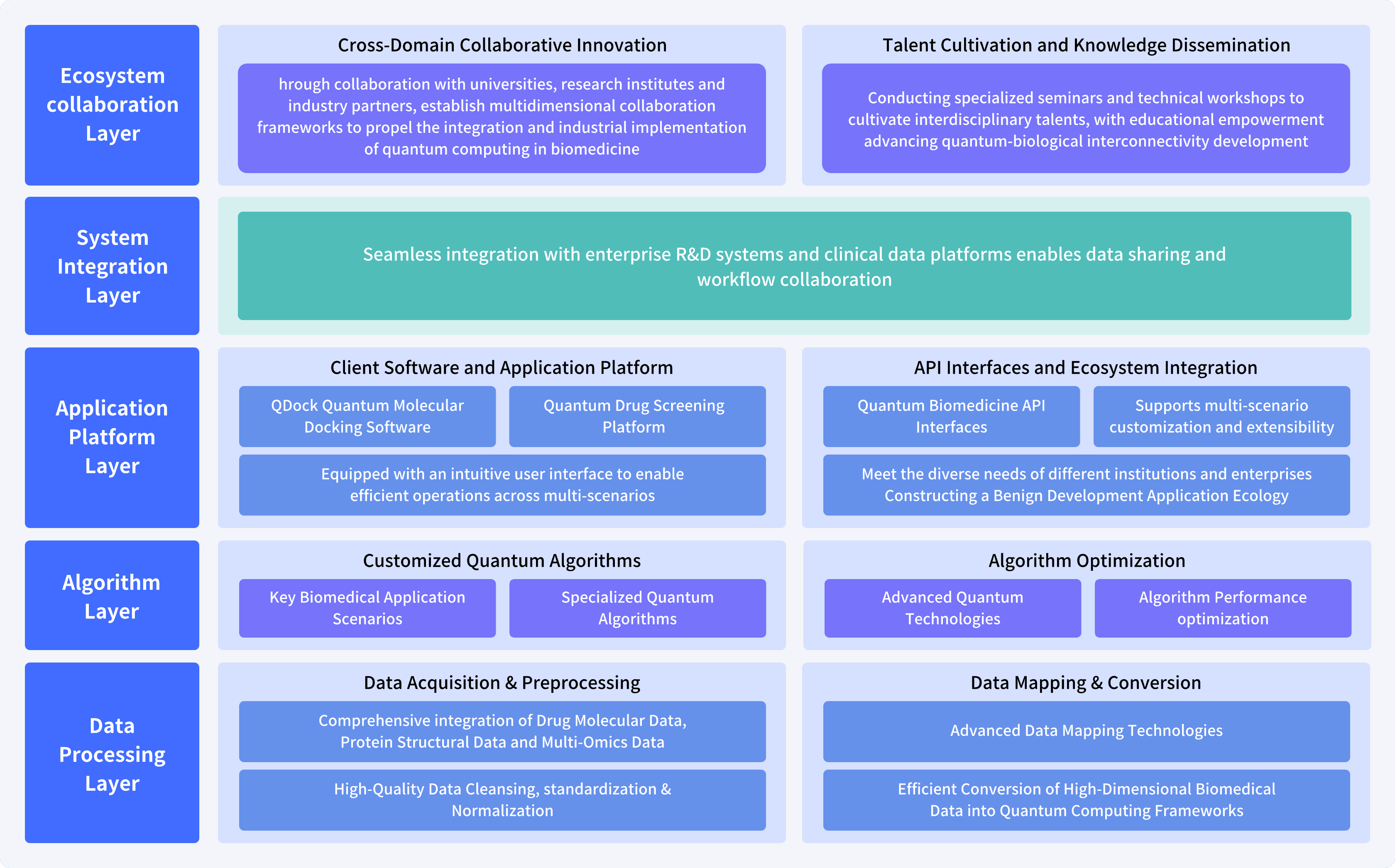
Solution Architecture
An architecture spanning data processing, algorithm models, software applications and computing resources.
Preprocess molecular, target and medical data, build features and combine quantum learning, optimization and classical methods; QDock, the drug screening platform and related tools support research, analysis and validation.
Key Advantages

Hybrid Computing for Research Workflows
Combine classical data processing with quantum modeling to explore new approaches to molecular computation, drug screening and medical data analysis.

Integrated Software and Algorithms
Docking software, screening platforms, apps and APIs connect research algorithms to tasks, supporting needs from application trials to custom research.

Support for Biomedical Tasks
Develop and validate models for drug–target relationships, docking, molecular similarity, toxicity prediction and medical imaging.

Interdisciplinary Collaboration
Joint software development, algorithm research and platform building connect quantum researchers with pharmaceutical R&D and clinical research teams.
Core Products and Capabilities
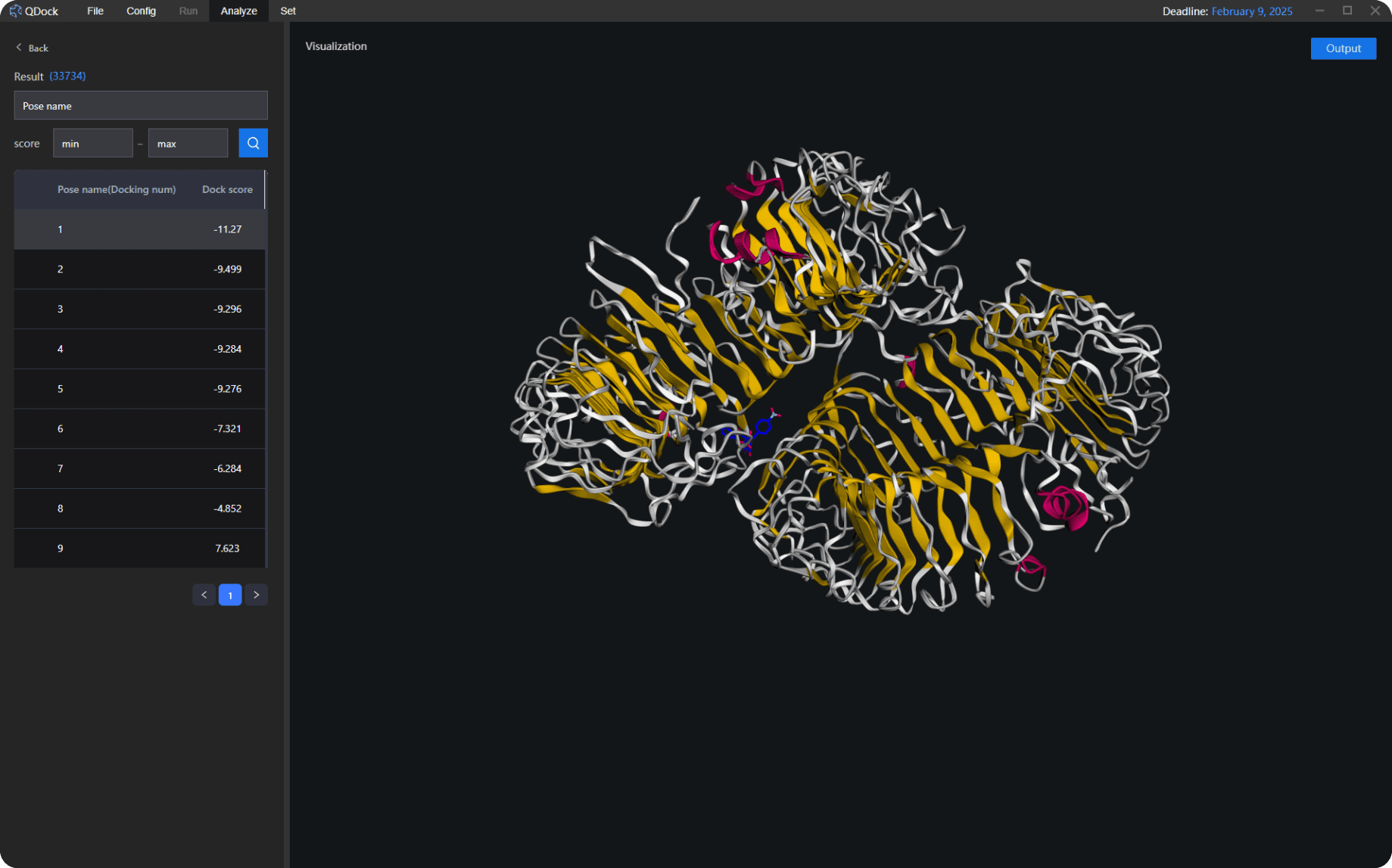
QDock Molecular Docking Software
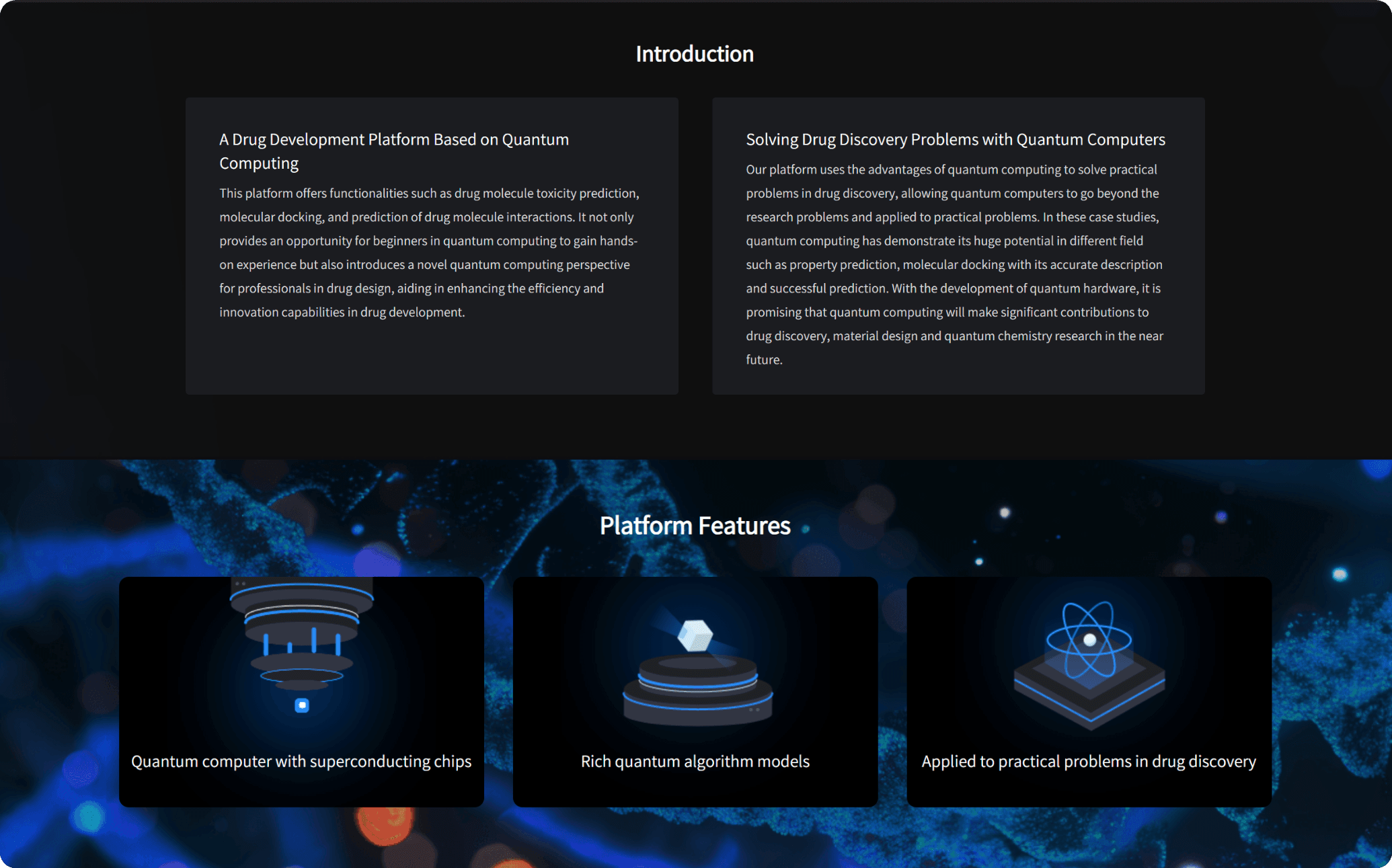
Quantum Drug Screening Platform
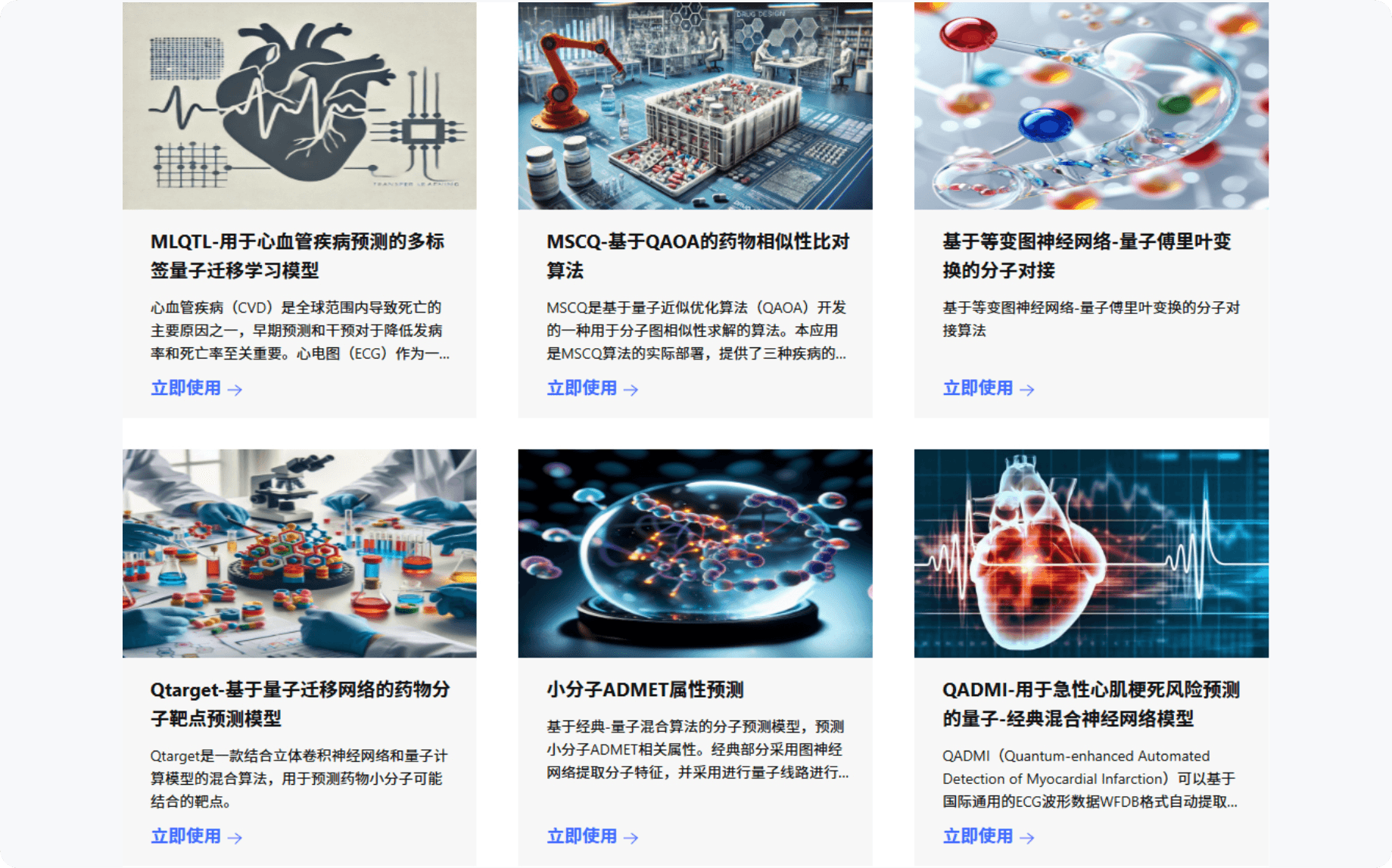
Quantum Biomedical Apps and APIs
Applications
Target Research
Drug–target prediction combines molecular, protein and biological data, posing challenges in data complexity, feature representation and validation.
Quantum transfer learning and hybrid models support drug–target modeling and prediction, informing candidate target analysis and subsequent experiments.
Lead Screening and Optimization
Vast chemical spaces and complex structure–activity relationships make candidate screening and optimization difficult.
Apply QFT, QEMCMC, and QAOA to conformational search, drug–target matching, and candidate comparison, enabling lead discovery and drug repurposing.
Drug Property and Interaction Prediction
Drug R&D must assess candidate properties and potential interactions to plan further experiments and research.
Hybrid quantum–classical learning and graph methods support toxicity and interaction prediction, with further ADMET analysis tailored to research needs.
Medical Analysis Support
Medical images and other data contain complex features, with limited labels and cross-source adaptation challenges in some tasks.
Variational quantum circuits, classical networks and transfer learning support image classification, segmentation and risk prediction research for medical analysis and decision support.
Collaboration Partners











Consultation Process
Consultation
Describe research tasks, available data and goals.

Assessment
Match computing needs with software and algorithms.
Joint Validation
Build models, compare algorithms and analyze results.
Implementation
Plan software, platforms or continued research based on validation.

Interested or have questions about our Biomedical solutions?
You can reach out to us for a free consultation by submitting an online inquiry or adding our assistant. We are here to provide you with dedicated support and answers.