
Origin Quantum SL Series Dilution Refrigerators

Millikelvin Cryogenic EnvironmentMultiple Models and ConfigurationsBuilt for Quantum Computing and Cryogenic Research

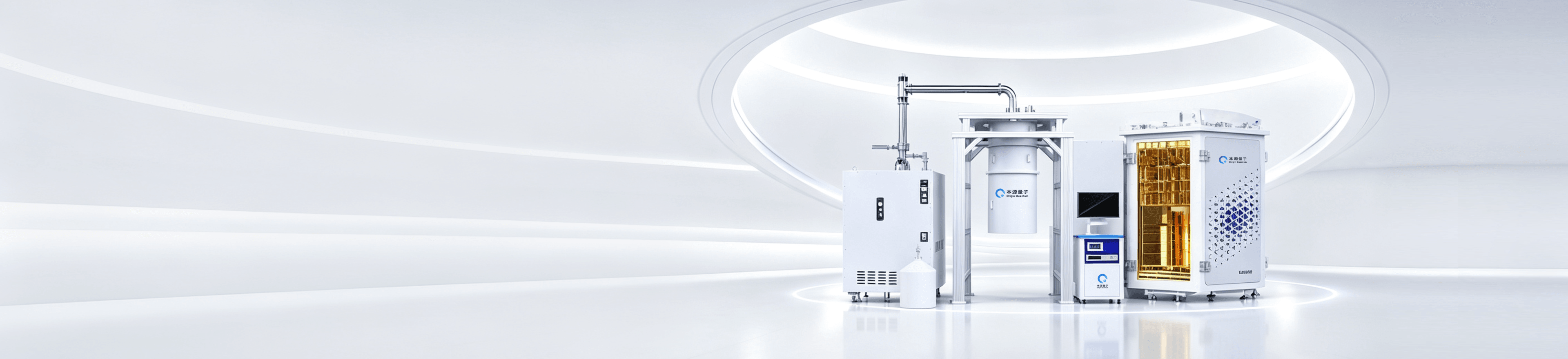
The Origin Quantum SL Series provides millikelvin cryogenic environments for quantum computing and low-temperature research. Cabling, magnets, magnetic shielding, vibration isolation, and other components can be configured for specific experimental requirements, providing a cryogenic platform for quantum-chip operation, precision measurement, and materials research.

Dilution Refrigerator Series

The SL Series offers three models—SL3000, SL1000, and SL400—with different cooling capacities, payloads, and interface configurations for a range of cryogenic applications.

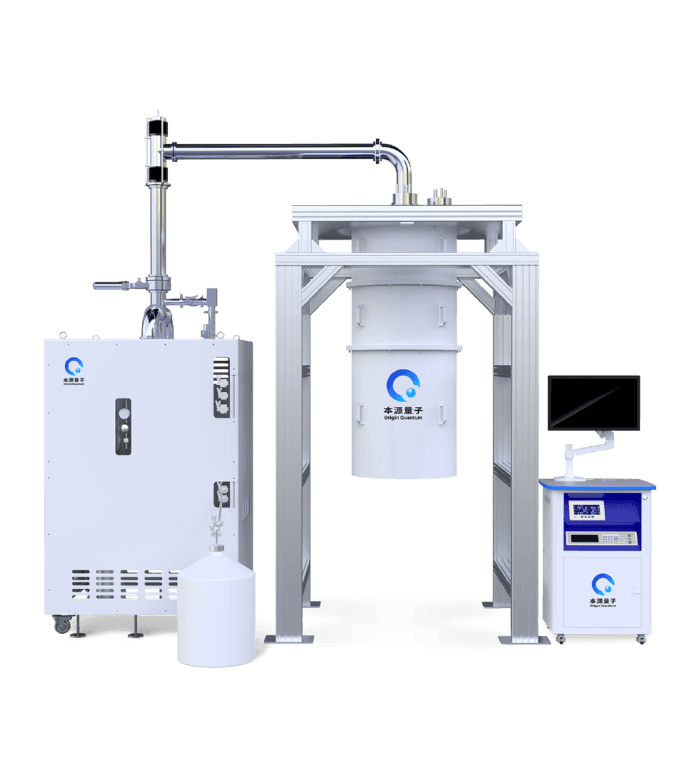
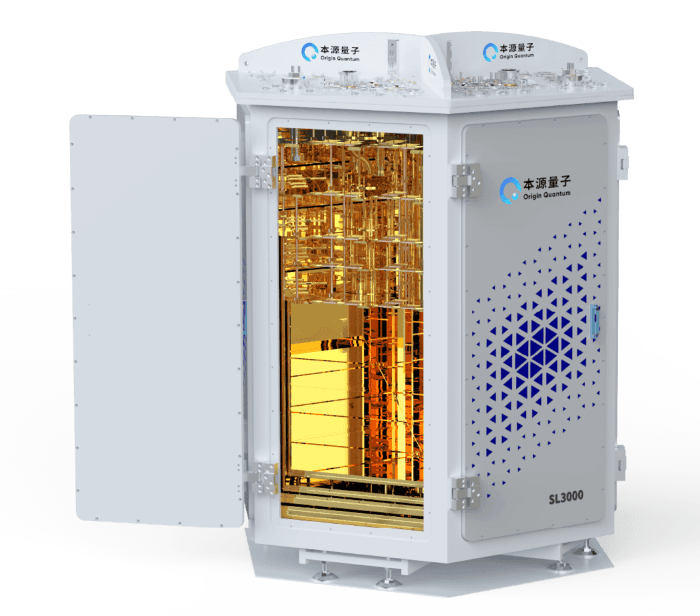
Origin SL3000 Dilution Refrigerator

Origin SL3000 Dilution Refrigerator

Designed for large-scale quantum computing, Origin SL3000 supports 4,000+ cables and a quantum chip with 1,000+ qubits and associated components. Its modular cooling system delivers at least 3,000 μW at 100 mK, supporting high-density wiring and multi-qubit integration.

Features
  • High-Density Cabling:Thirty 100 mm cable ports support high-density wiring.
  • High-Reliability Sealing:An integrated valve plate reduces leakage risks and improves long-term sealing reliability.
  • High-Precision Temperature Sensing:Fourth-generation cryogenic RuO₂ sensors resist interference and improve signal stability.
  • Vibration Isolation:A split pulse-tube cryocooler and flexible thermal links reduce vibration in the cryogenic environment.
Specifications
Base Temperature≤12 mK
Cooling Power at 20 mK≥90 μW
Cooling Power at 100 mK≥3,000 μW
MC Plate Area1.6 m²
Maximum Payload500 kg
Origin SL1000 Dilution Refrigerator

Origin SL1000 Dilution Refrigerator

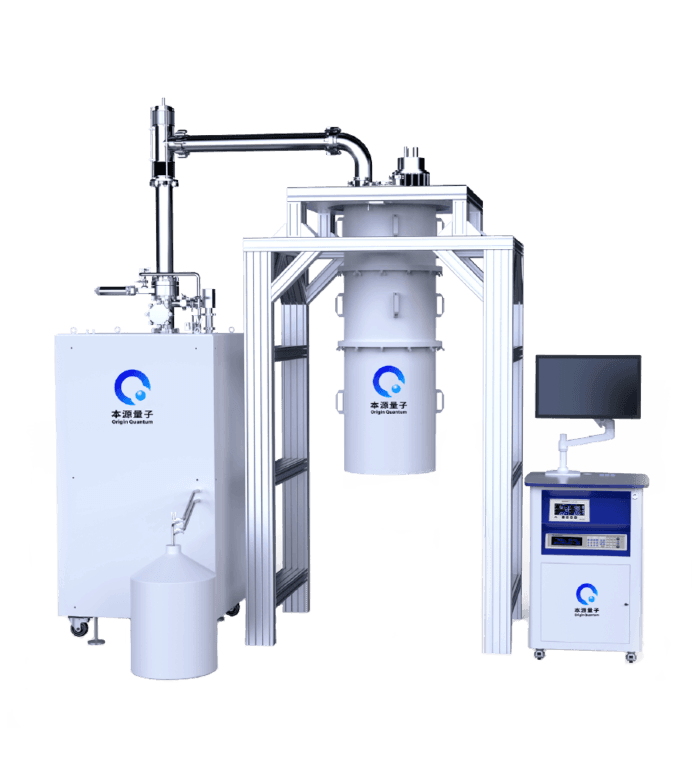
Origin SL1000 provides temperatures below 10 mK and at least 1,000 μW at 100 mK. It supports quantum computing, condensed matter physics, materials science, and astronomical detector research. Standard components include a cryostat, gas handling system, LN₂ cold trap, air compressor, support frame, and control unit, with HMI-based automated operation.

Key Advantages
  • Port Options:Six ISO-K100 ports, each convertible to three KF40 ports, plus six additional KF40 ports.
  • Real-Time Monitoring:An in-house developed temperature controller and RuO₂ sensors provide full-range, real-time monitoring.
  • Automated Cooldown:Dedicated software enables one-touch automated cooldown within 40 hours.
  • Flexible Configuration:Options include active vibration isolation, superconducting magnets, magnetic shielding, signal modules, and water cooling.
Specifications
Base Temperature≤10 mK
Cooling Power at 20 mK≥30 μW
Cooling Power at 100 mK≥1,200 μW
Cooldown Time≤40 h
Warm-Up Time≤30 h
Origin SL400 Dilution Refrigerator

Origin SL400 Dilution Refrigerator

Origin SL400 provides temperatures below 10 mK for quantum computing, condensed matter physics, materials science, and deep-space research. Standard components include a cryostat, gas handling system, LN₂ cold trap, air compressor, support frame, and control unit, with HMI-based automated operation.

Key Advantages
  • Port Options:Two ISO-K100 ports, each convertible to three KF40 ports, plus four additional KF40 ports.
  • Real-Time Monitoring:An in-house developed temperature controller and RuO₂ sensors provide full-range, real-time monitoring.
  • Automated Cooldown:Dedicated software enables one-touch automated cooldown within 30 hours.
  • Flexible Configuration:Options include active vibration isolation, superconducting magnets, magnetic shielding, signal modules, and water cooling.
Specifications
Base Temperature≤8 mK
Cooling Power at 20 mK≥15 μW
Cooling Power at 100 mK≥600 μW
Cooldown Time (300 K–10 mK)≤30 h
Warm-Up Time≤24 h

SL Series Product Comparison

SpecificationOrigin SL3000 Dilution RefrigeratorOrigin SL1000 Dilution RefrigeratorOrigin SL400 Dilution Refrigerator
Base Temperature≤12 mK≤10 mK≤8 mK
Cooling Power at 20 mK≥90 μW≥30 μW≥15 μW
Cooling Power at 100 mK≥3,000 μW≥1,200 μW≥600 μW
MC Plate Dimensions—Φ500 mmΦ300 mm
MC Plate Area1.6 m²——
Cooldown Time—≤40 h≤30 h
Warm-Up Time—≤30 h≤24 h
Dimensions and WeightCryostat: 2.6 m × 2.3 m × 3.5 m, 7,300 kg Gas handling systems: 3 units, each 1.2 m × 0.8 m × 1.8 m and 400 kg Control unit: 0.8 m × 0.6 m × 1.5 m, 100 kgCryostat: 1.6 m × 1.3 m × 3.5 m, 800 kg Gas handling system: 1.3 m × 1.1 m × 2.0 m, 600 kg Control unit: 0.8 m × 0.6 m × 1.5 m, 100 kgCryostat: 1.6 m × 1.0 m × 3.5 m, 600 kg Gas handling system: 1.2 m × 0.8 m × 1.8 m, 400 kg Control unit: 0.8 m × 0.6 m × 1.5 m, 100 kg
Space RequirementsMinimum clear height: 5 m; minimum floor area: 6 m × 6 mMinimum clear height: 5 m; minimum floor area: 4 m × 6 mMinimum clear height: 5 m; minimum floor area: 4 m × 6 m
Contact UsContact UsContact Us

Key Application Scenarios

Beyond quantum computing, dilution refrigerators provide millikelvin experimental environments for condensed matter physics, materials science, astronomical detector research, semiconductor research, and nanoelectronics.

Quantum Information and Quantum Computing

Quantum Information and Quantum Computing

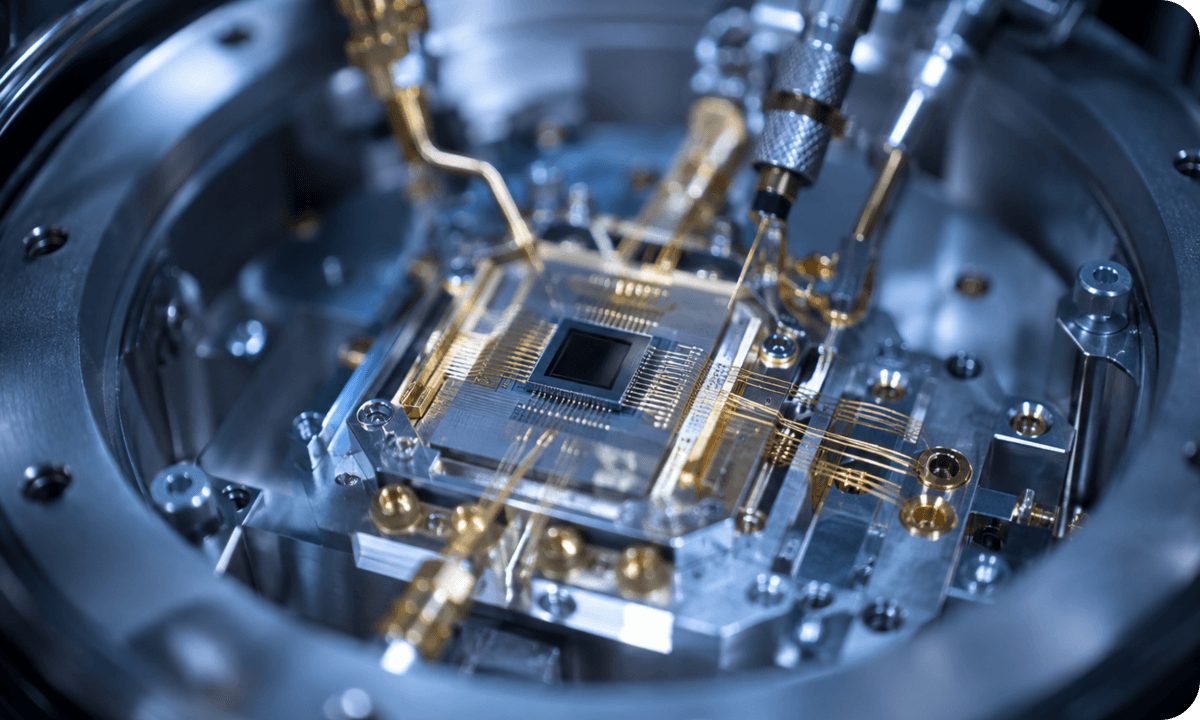
Superconducting and silicon spin qubits have small energy-level spacings and are sensitive to thermal excitation and environmental noise. A cryogenic environment at approximately 10 mK helps reduce thermal excitation and supports qubit initialization, gate operations, and related low-temperature experiments. The system also provides staged cooling for microwave control chains and cryogenic low-noise amplifiers, supporting low-noise readout of weak quantum signals.

Condensed Matter Physics and Materials Science

Condensed Matter Physics and Materials Science

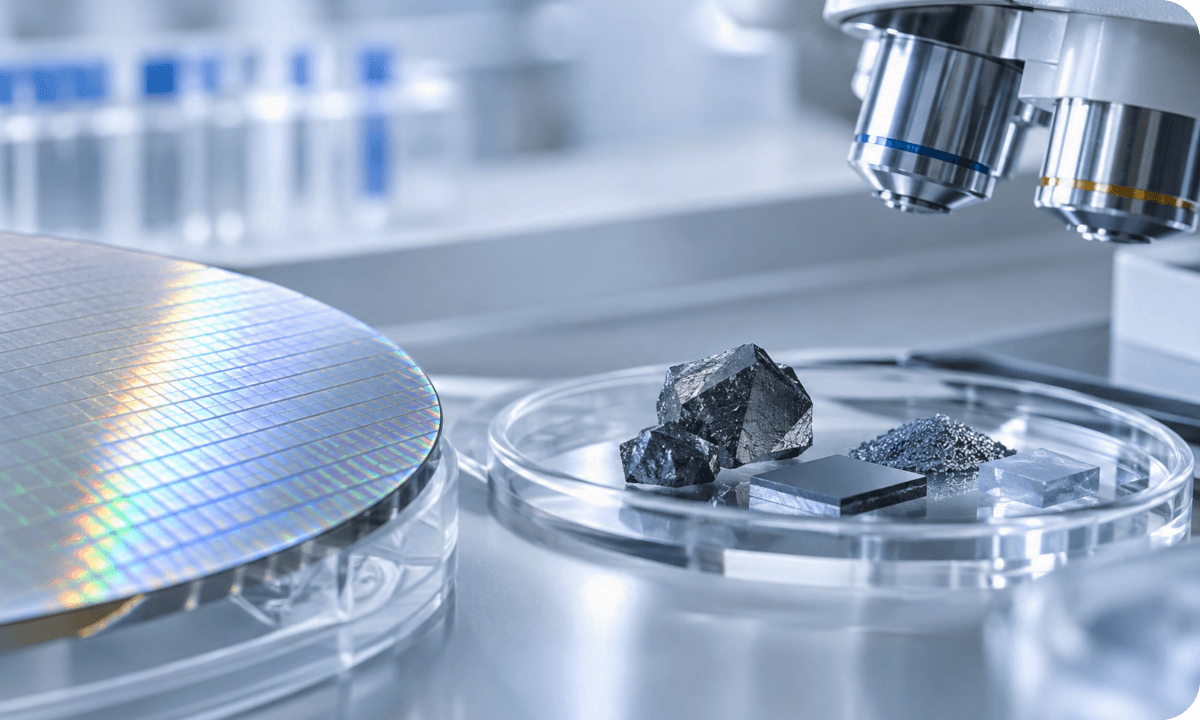
Dilution refrigerators can support electrical transport measurements of two-dimensional materials, topological insulators, and heavy-fermion superconductors. Millikelvin temperatures help reduce thermal broadening and lattice-vibration effects. When combined with a high-field magnet system, they provide experimental conditions for studying integer and fractional quantum Hall effects, edge-state transport, and quantum critical phenomena.

Astronomical Observation and Deep-Space Exploration

Astronomical Observation and Deep-Space Exploration

Dilution refrigerators can support detector development and observation systems for cosmic microwave background, far-infrared, and terahertz astronomy. They provide a stable sub-100 mK operating environment for transition-edge sensors (TESs) and microwave kinetic inductance detectors (MKIDs), supporting high-sensitivity detection of weak radiation signals. Actual performance depends on the detector type and system configuration.

Semiconductor Research and Nanoelectronics

Semiconductor Research and Nanoelectronics

In single-electron transport experiments, thermal energy must be substantially lower than the electrostatic charging energy. Millikelvin temperatures help reduce thermal broadening and provide suitable conditions for studying quantum-dot energy levels, Coulomb-diamond regions, and single-electron pumping, as well as for research in single-electron metrology and nanoelectronic devices.

Four Key Technical and Configuration Features

1

Low-Vibration and Electrical-Isolation Design

The system uses a pulse-tube cryocooler and can be configured with flexible thermal links. This design maintains thermal conductivity while helping reduce the transmission of mechanical vibration into the cryogenic region and limiting disturbances to sensitive experiments.

2

Rapid Warm-Up

Selected models include a rapid warm-up function that returns the system from cryogenic temperatures to room temperature under specified operating conditions, reducing waiting time for sample replacement, commissioning, and maintenance. Warm-up time varies by model and configuration.

3

In-House Developed Cryogenic Temperature Sensors

The system can be equipped with in-house developed cryogenic temperature sensors designed and optimized for dilution-refrigerator environments. These sensors provide stable temperature-monitoring data and support system temperature control and configuration expansion.

4

Gas-Gap Heat Switch and Pre-Cooling Technology

Selected models use gas-gap heat switches. During the initial cooldown stage, the switch provides a high-conductance thermal path for pre-cooling. At cryogenic operating temperatures, it transitions to a low-conductance state to reduce heat leakage. This technology helps shorten cooldown time and improve operating efficiency.

Looking for the Right Cryogenic Solution for Your Research?

Contact our technical team to select an SL Series model and configuration based on your experimental objectives, cooling-power requirements, cabling, and expansion needs.

Contact Us
Origin Quantum SL Series Dilution Refrigerators